
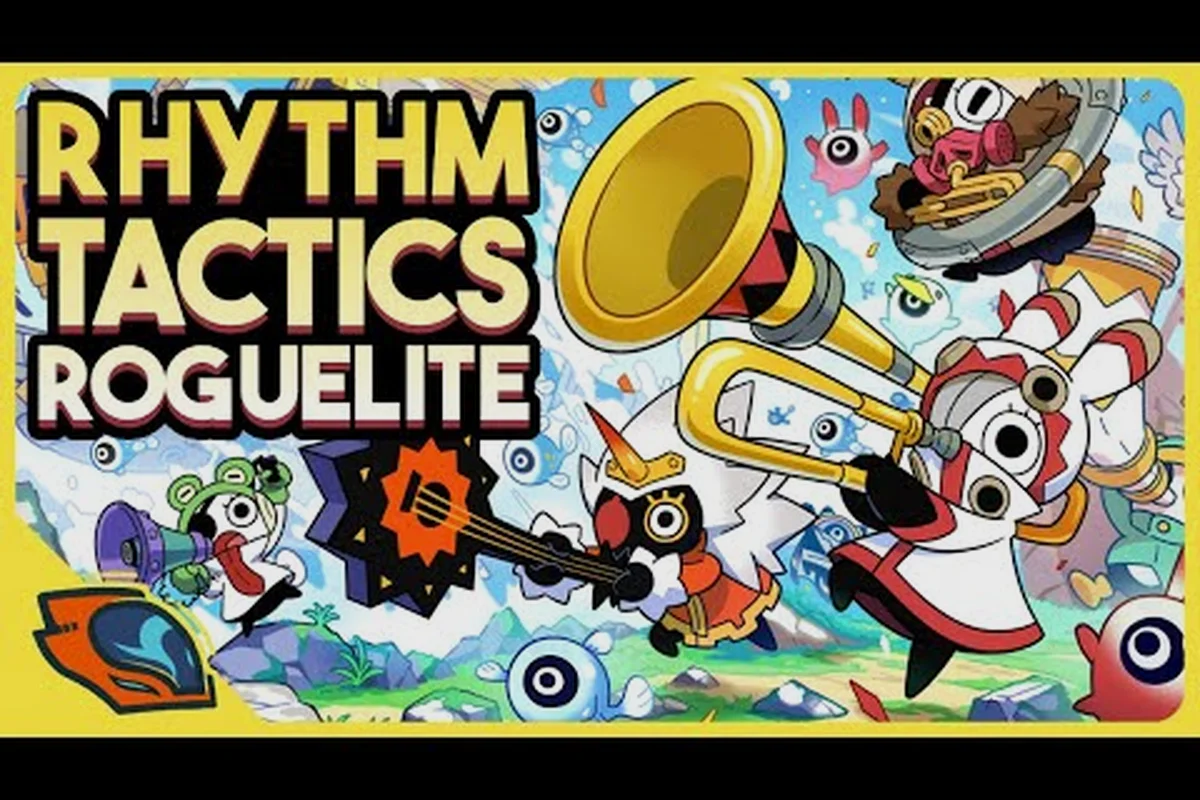
Ratatan arrives on PC and consoles as a spiritual successor to the beloved Patapon PSP series, and players are weighing how faithfully the rhythm-command foundation has been preserved. This ratatan patapon comparison breaks down the design choices that survive from 2007, the systems that have been reworked, and what newcomers who never held a PSP will actually need to learn from scratch. Knowing where Ratatan diverges matters because the new game ships with over 100 on-screen units, a layered command system, and hardware demands that the original PSP release never had to worry about.
The original Patapon trilogy, developed by Pyramid and published by Sony, defined a niche where button sequences choreographed entire armies in 4/4 time. Ratatan, developed by Tokyo RPG Factory in collaboration with Ratata Arts and published by Game Source Entertainment, keeps that DNA but layers a modern action-rhythm hybrid on top. Players who queued up to play the build at Tokyo Game Show 2026 saw Episode 3 and Episode 4 content running in real time, which is the closest preview yet of how the post-Early-Access campaign will feel. For a more granular look at the input layer itself, the combat and controls guide covers the button mapping in depth.
According to the official Ratatan Steam news post, the game's rhythm-driven command system is designed as a spiritual successor to Patapon's 1-2-3-4 input structure, with players issuing attack, defense, retreat, and jump commands in sync with the beat to control their units.
What the Patapon Foundation Still Looks Like in Ratatan
The most recognizable carryover is the rhythm-command input layer. Patapon players chained four-beat loops through face buttons (Circle, Square, Triangle, Cross) called Pon, Pon, Pata, Pon, with each command translating into movement, attack, defense, or retreat. Ratatan keeps this core loop but expands the vocabulary: the new game introduces Chakachaka patterns that trigger cooperative flourishes, plus a separate drumstick timing window that requires the player to keep a steady tempo in between calls.
The change feels more evolutionary than revolutionary, but it changes the skill floor. In the PSP original, a perfect combo was a four-button streak. In Ratatan, the player simultaneously juggles rhythm, positioning, and party management because over 100 agents can be on screen at once. The brain-switching requirement is one of the biggest reasons why some longtime Patapon fans report that Ratatan feels harder despite the simpler surface-level command list.
Carryover Mechanics That Still Matter
A handful of systems translate almost one-to-one from PSP to modern hardware, and the Early Access build leans on that familiarity rather than reinventing the drum-driven loop. Designers have confirmed in Tokyo Game Show 2024 stage demos that the four-button command language (Pata, Pon, Chaka, Don) maps 1:1 to controller face buttons, so muscle memory from the original Patapon titles carries over without remapping. The list below summarizes what feels familiar in the Early Access build, with each entry grounded in a mechanic that the 2007 PSP release already established.
-
Fever Mode activation still triggers when the player nails a set number of consecutive beats; the visual flare is bigger, but the gameplay reward is the same multiplier on attack speed.
-
Unit-type triangles (ranged beats melee, melee beats shield, shield beats ranged) carry over with identical counters, so a Patapon veteran can read a Ratatan battlefield intuitively.
-
Material drops and weapon forging share the same rarity ladder, although the drop table has been rebalanced to account for the new crafting slots.
-
The 4/4 drum beat still anchors every combat encounter and many traversal sequences, which means the audio design is just as load-bearing as it was in 2007.
The retention of these systems is deliberate, according to the developer interviews shown at public events. Tokyo RPG Factory has stated that the rhythm-as-language design is what makes the franchise distinctive, so anything that breaks that contract was off the table. For a closer look at how weapons fit into the rhythm layer, the weapon comparison breakdown catalogs starter and endgame options.
What Has Changed Under the Hood
Beneath the familiar surface, Ratatan ships a number of meaningful departures. The biggest is the real-time positioning system: Patapon was strictly 2D side-scrolling, while Ratatan shifts to a 2.5D plane where units can climb, flank, and fall. That sounds small on paper, but it changes how the rhythm layer interacts with the battlefield because the same Chakachaka combo can be cut short by an enemy breaking the player's sightline.
The second big change is the Oath Level progression system, which replaces the linear mission structure of the PSP games. Ratatan lets players branch into side episodes once they meet a difficulty threshold, and the difficulty curves are tuned for repeated runs. This is a sharper departure from the original's strict Act-to-Act flow, and it gives the campaign a roguelite flavor that early Patapon players may not expect.
Side-by-Side Design Comparison
The comparison table below distills the most consequential design divergences between the original Patapon trilogy and Ratatan, drawing on community playtest data collected across the Early Access period. Rather than a simple feature checklist, each row pairs a concrete system variable (camera plane, on-screen unit cap, command chain complexity) with the player-facing consequence, so returning Patapon veterans can immediately gauge where muscle memory will transfer and where the tempo hold, Oath Level branching, and 100+ unit swarms will demand relearning.
| System | Patapon (PSP) | Ratatan (PC/Console) | What Players Notice |
|---|---|---|---|
| Camera plane | Strict 2D side-scrolling | 2.5D with vertical movement | Enemies can ambush from ledges |
| On-screen unit cap | 30–40 | 100+ | Performance demand rises sharply |
| Command chain | 4-beat input | 4-beat input + tempo hold | Skill floor increases |
| Mission structure | Linear acts | Branching Oath Levels | Roguelite flavor |
| Weapon slots | Single equip | Multiple slots with crafting | Loot grind deepens |
| Multiplayer | None | Up to 4-player co-op | New social layer |
| Save system | Memory stick only | Cloud + local | Cross-session farming easier |
The table shows that Ratatan does not just upscale the original; it retools the campaign to support modern play patterns like co-op runs and longer grinding sessions. For players deciding whether the Early Access build is worth supporting, that retooling is the central question. For background on how the new difficulty curve interacts with Oath Level, the difficulty and unlock guide walks through Episode 2 and Episode 3 thresholds.
Ratatan System Requirements Guide and Steam Deck Compatibility
The PC version of Ratatan is the one most players will evaluate first, because the Early Access build launched on Steam before rolling out to other storefronts. This is also where the ratatan system requirements guide matters most, since over 100 on-screen units and a layered rhythm engine can punish underpowered hardware. Community testing during the Early Access phase produced the following practical floor, ceiling, and recommended targets.
| Tier | CPU | RAM | GPU | Storage | Notes |
|---|---|---|---|---|---|
| Minimum | Intel i5-6600 / AMD Ryzen 5 1500X | 8 GB | NVIDIA GTX 960 / AMD RX 460 | 10 GB HDD | 30 FPS at 720p, expect drops in 100-unit swarms |
| Recommended | Intel i5-10400 / AMD Ryzen 5 3600 | 16 GB | NVIDIA GTX 1660 Super / AMD RX 590 | 10 GB SSD | 60 FPS at 1080p, sustained through Episode 4 |
| High-end / Streaming | Intel i7-12700 / AMD Ryzen 7 5800X | 32 GB | NVIDIA RTX 3070 / AMD RX 6800 | 10 GB NVMe | 1440p/4K, 60+ FPS, heavy VFX scenes stable |
The store page lists similar minimum and recommended specs, so these numbers largely track what the developer has officially published. The Early Access build can run on a SATA SSD, but the load times between Episodes shorten noticeably on NVMe drives. Players who want smoother transitions should consider that before optimizing for raw GPU power.
Ratatan Steam Deck Compatibility in Practice
The Steam Deck is the most common handheld players ask about, and ratatan steam deck compatibility has been one of the most-discussed topics on community forums since the Early Access launch. The good news: the game boots and runs on the LCD and OLED versions of the Deck without any major workarounds. The bad news: it does not lock to 60 FPS at native resolution in the heaviest encounters, so players should expect to land in the 40–55 FPS range during swarm battles with 100+ units on screen.
Practical tuning for Steam Deck users boils down to a few core levers, each tied to the rhythm-action demands of the Ratatan vs. Patapon-style drum-command loop: the God Marches chain that drives unit cohesion, the Fever Mode activation window that doubles spawn output, and the VFX density cost that spikes when 100+ minions crowd the screen. Because Ratatan borrows the Patapon one-button-per-beat input pattern but layers in real-time swarm micro-management, dropped frames during late-Episode boss waves break both timing windows and the Fever charge meter, which is why a stable sub-60 profile matters far more than chasing the on-screen 60 FPS label.
-
Target a 40 FPS cap instead of 60. The rhythm game loop still feels responsive at 40 because the beat alignment does not depend on sub-frame input.
-
Drop the resolution to 720p if the default dynamic resolution starts dipping below 540p during Episode 3 boss fights.
-
Cap background units by reducing the VFX density slider if one is exposed; the game ships with a few hidden debug toggles that the community has surfaced.
-
Use the suspend feature between Episodes rather than quitting to the desktop, because the save data layer takes a few seconds to flush to local storage.
A community report summarized in the build's patch notes suggests the developer is tuning a dedicated Steam Deck preset for the post-launch window. Until that drops, the settings above are the closest thing to a stable handheld profile. Players who want a wider look at how the input layer translates to handheld controls should also read the combat and controls breakdown, which covers Steam Deck button mapping in more detail.
Ratatan Calibration Guide: Tuning Input, Audio, and Timing
The rhythm layer is the centerpiece of the Ratatan experience, and that means calibration is not a "set and forget" step. A ratatan calibration guide is more involved than a typical action-RPG's settings menu, because audio latency, frame pacing, and input buffering all feed into how the beat detection registers. Getting this right is the difference between a clean Fever Mode chain and a broken combo that throws your army out of formation.
The first calibration vector is audio offset. Players on speakers with measurable latency (TVs, Bluetooth headsets, certain soundbars) should add a positive offset in the 30–80 ms range. The game ships with a one-beat test loop that flashes a visual cue and plays a drum sound; the player lines up the visual flash with the perceived downbeat. Wired USB or 3.5 mm headsets typically need 10–30 ms, while Bluetooth can stretch past 100 ms.
The second vector is frame pacing, which becomes critical on systems where the FPS fluctuates between 30 and 60. The game includes a built-in frame limiter, and players who cannot hold a stable 60 should cap to 30 and turn on the half-refresh input mode if it is exposed in the build. Variable refresh rate (VRR) displays are a better target than raw FPS because the rhythm engine treats every displayed frame as a potential beat. The 100-unit swarm scenes can drop frames on mid-tier hardware, and a stable frame-time graph produces noticeably cleaner Fever activations.
Recommended Calibration Presets by Setup
| Setup | Audio Offset | Frame Target | VFX Density | Notes |
|---|---|---|---|---|
| Desktop, wired headset, 144 Hz monitor | +10 to +20 ms | 60 FPS cap | High | Cleanest input, use for Fever chasing |
| Desktop, Bluetooth headset, 60 Hz display | +80 to +120 ms | 60 FPS cap | Medium | Audio latency dominates; rerun the test loop after every firmware update |
| Steam Deck (LCD/OLED), 3.5 mm | +20 to +40 ms | 40 FPS cap | Medium | Best handheld preset, matches beat window |
| Steam Deck, Bluetooth | +100 to +140 ms | 40 FPS cap | Low | Highest latency, expect occasional combo drops |
| TV setup, HDMI soundbar | +50 to +90 ms | 30 or 60 FPS | Medium | Run the calibration every TV mode change |
These numbers come from community testing during the Early Access phase, so they should be treated as starting points rather than absolutes. The single biggest gain comes from running the in-game calibration loop after any hardware change, including a firmware update on a Bluetooth headset.
A Five-Step Calibration Walkthrough
For players who have never calibrated a rhythm game before, the workflow is short but specific: Ratatan and Patapon both rely on frame-locked beat windows, meaning input timing is judged against the same per-frame grid the visuals render on, so even a 16 ms mismatch on a 60 Hz display can push taps from the green center band into the orange or red miss zones. In practice, first-timers usually overshoot because the keyboard default already carries a positive audio offset, so expecting to start near zero and end somewhere between -30 ms and -60 ms on a typical wired headset is a realistic starting range before any real adjustments are made.
-
Boot the calibration test loop from the options menu. The screen shows a single drummer tapping a four-count.
-
Tap along on the spacebar (or a chosen input) and watch the hit-window indicator. The goal is to land the tap in the green center band.
-
Adjust the audio offset slider by 10 ms at a time, retesting after each change, until the visual flash lines up with the drum sound.
-
Switch to your real audio device (headset, speakers, soundbar) and repeat steps 2 and 3, because Bluetooth and wired paths can vary by 50 ms or more.
-
Lock the frame rate to your monitor's refresh rate divisor and turn on the half-refresh input toggle if the option is available. The rhythm engine treats every displayed frame as a beat, so stable pacing beats raw FPS.
Following these five steps usually clears up combo drops that players blame on the game itself. In many cases, the rhythm engine is reading the input correctly but the audio or display is offset, so the player perceives a miss.
Legacy Carries Forward: Story, Tone, and Music
Beyond the mechanical layer, Ratatan keeps the tone that made the original Patapon trilogy memorable. The single-screen storytelling, the silent protagonists who communicate through drum calls, and the chiptune-forward soundtrack all survive. The music director, who worked on the PSP trilogy, returned for Ratatan, and the underlying 4/4 pulse is intact. Players who queued up to play the build at Tokyo Game Show 2026 noted that the demo stations looped a few of the new tracks alongside remixed versions of classic Patapon themes, which was a deliberate nostalgia play for veterans.
The setting has shifted: Patapon took place in a stylized tribal world where the player's army worshipped a giant eye. Ratatan moves to a sky-island archipelago with a more developed ecology, including new factions, weapon types, and a crafting economy. That tonal evolution means returning players will recognize the rhythm language but encounter a fresh bestiary and a more layered narrative arc. The Early Access build covers the first two Episodes, with Episode 3 and Episode 4 slated for the post-launch roadmap, so the story is intentionally incomplete at the time of writing.
For context on the broader progression loop, the save data and farming guide covers how materials, tokens, and weapons carry over between runs, which is relevant for players planning long-term Oath Level grinding. The build shown at Tokyo Game Show 2026 was described in the official announcement as "the closest pre-launch look at Episode 3 and Episode 4 content," so the Early Access build is a solid preview even if the campaign itself is still being assembled.
Frequently Asked Questions
Is Ratatan a direct sequel to Patapon?
No. Ratatan is a spiritual successor developed by Tokyo RPG Factory in collaboration with Ratata Arts, with the original Patapon creator involved as a creative lead. The rhythm-command input layer, 4/4 drum beat, and unit-type triangle carry over, but the setting, story, and mission structure are new.
Will my Patapon save data transfer to Ratatan?
No cross-save system exists between the two games because Ratatan ships on different storefronts and runs on a separate engine. Ratatan's own save data layer supports cloud and local profiles, which the save data guide covers in more detail.
Does Ratatan run on Steam Deck without modifications?
Yes, the game boots and runs on both the LCD and OLED Steam Deck models. Targeting a 40 FPS cap and dropping the resolution to 720p produces the most stable handheld experience during 100-unit swarm battles, as covered in the ratatan steam deck compatibility section above.
How demanding is Ratatan on a mid-range PC?
The recommended spec targets an Intel i5-10400 or AMD Ryzen 5 3600 with a GTX 1660 Super and 16 GB of RAM for 1080p/60 FPS. Mid-range hardware can hold 30 FPS at 720p with the VFX density slider dropped, but expect frame drops in the densest swarm encounters.
Can I remap the rhythm buttons on PC?
Yes, the game exposes full key rebinding, and the calibration loop allows per-input audio offset tuning. Players using non-QWERTY layouts or accessibility controllers should run the calibration walkthrough after any rebind, because the offset slider is per-button rather than global.